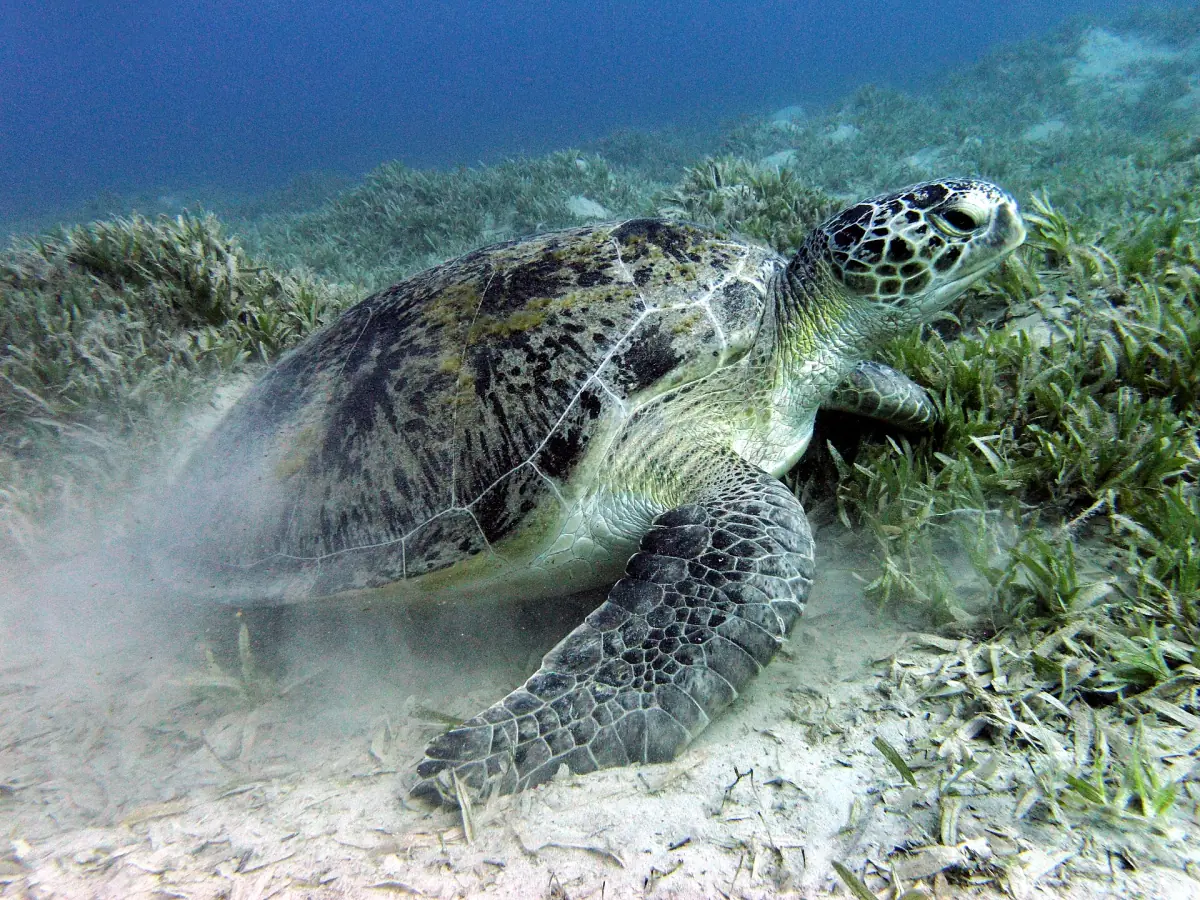
Sea turtles on the Marsa Alam coast
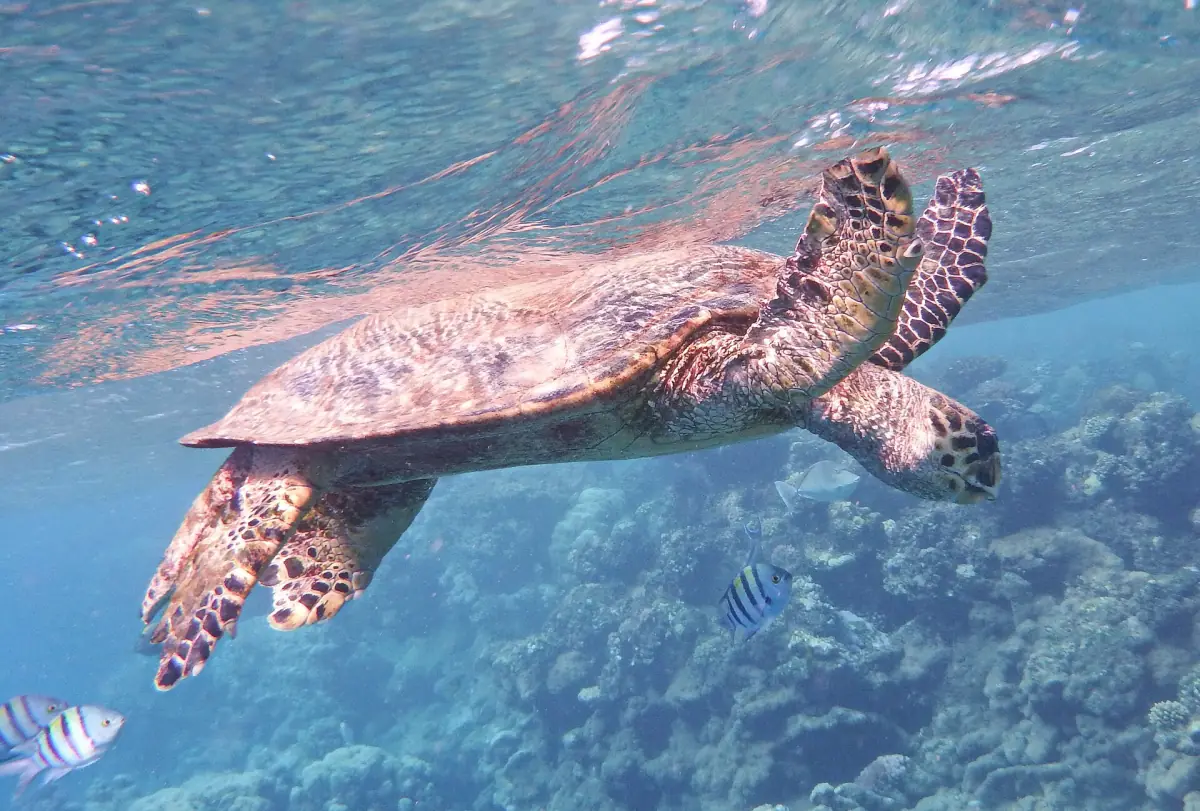
Two species matter for a visit: the green turtle (Chelonia mydas) and the hawksbill turtle (Eretmochelys imbricata). Both nest and feed along the Egyptian Red Sea coast. Other species, such as the leatherback and the olive ridley, are rare here, and the loggerhead only reaches the Egyptian Red Sea now and then. Plan for green and hawksbill turtles, and treat anything else as a surprise.
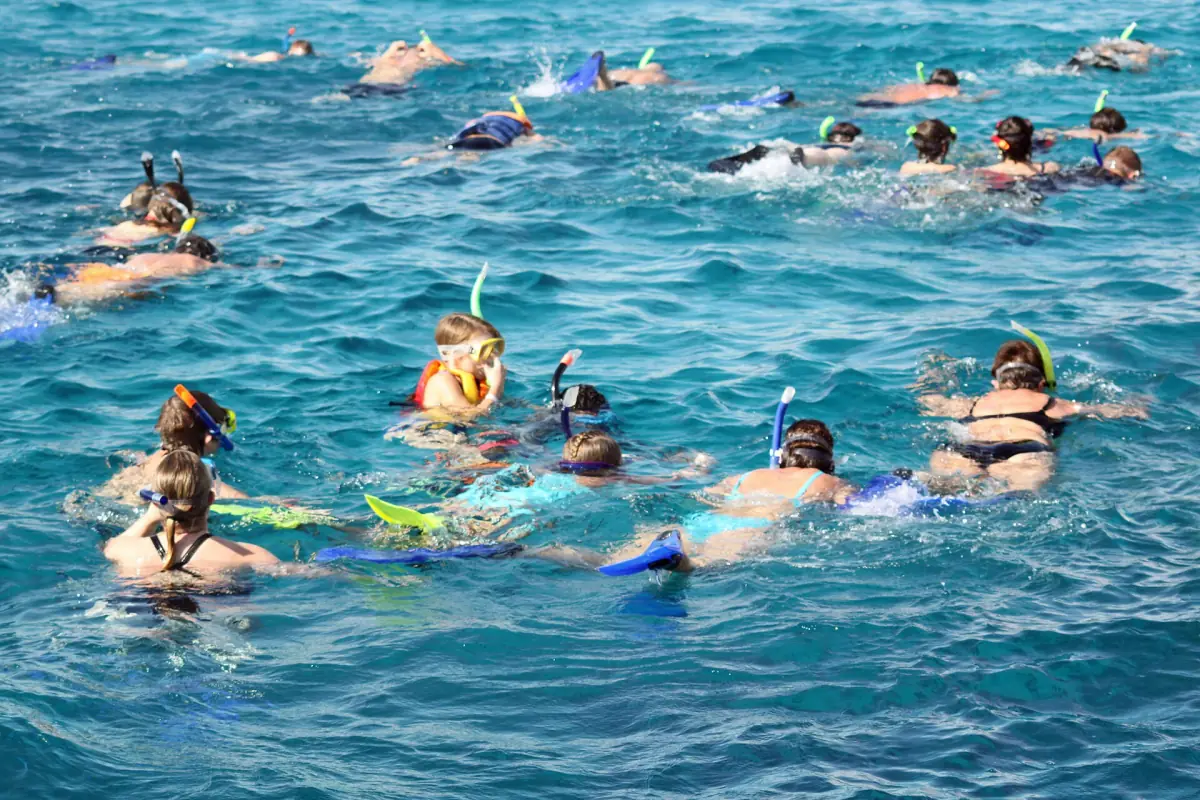
You can meet a turtle while snorkeling from a boat, at a house reef or in a seagrass bay such as Abu Dabbab. No day can promise an encounter, and no trip should promise one. What every trip can promise is a briefing on how to behave, and that is what this page covers.
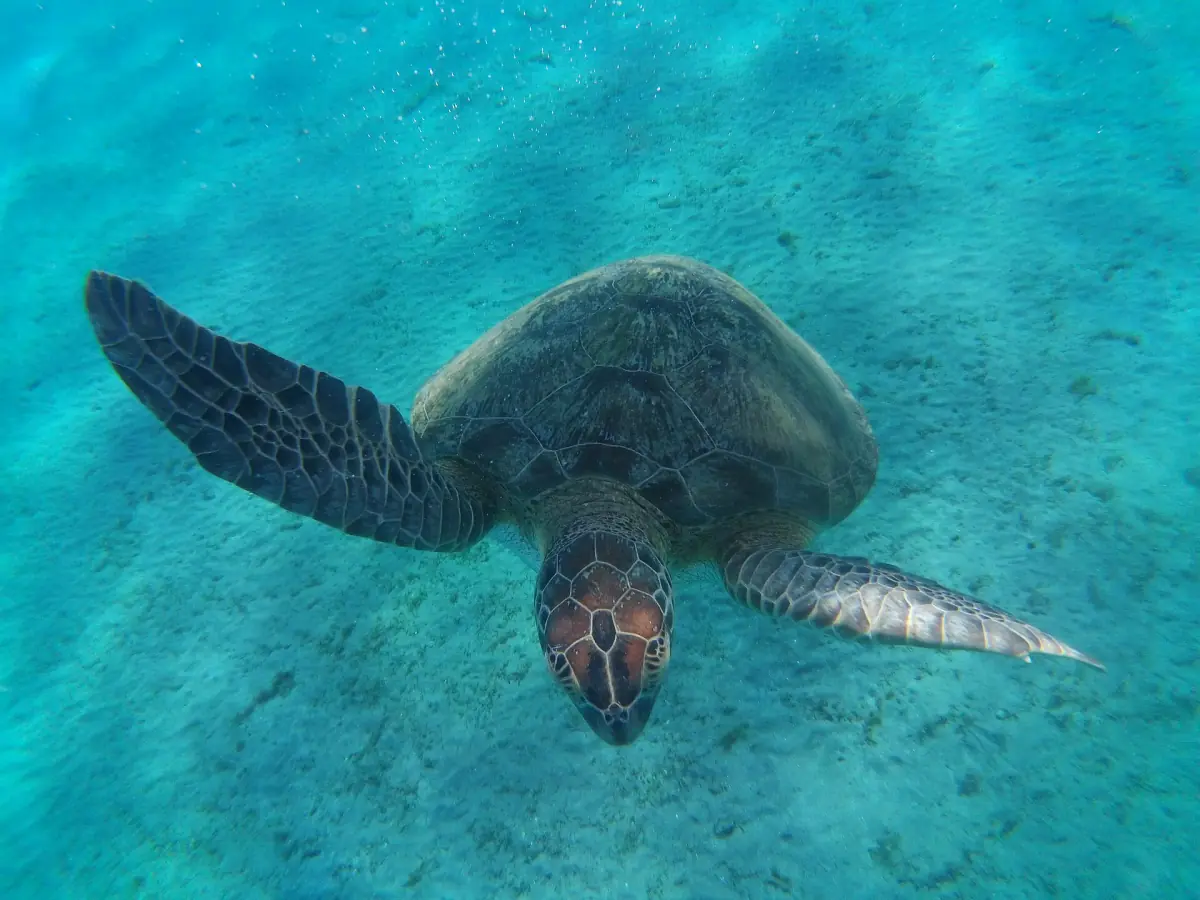
Our pick: a turtle snorkeling trip
Two guided sessions in the Marsa Mubarak seagrass bay, where turtles feed. It matches this page because it is a guided trip to a bay where turtles feed, and the page explains the distance rules.
Hand-picked tours, booked through Viator. Prices are indicative starting prices in US dollars (as of October 2026). Tap a tour for live availability and the current price in your currency.
Snorkeling trips with turtle habitat
Boat trips and snorkeling tours to reefs and seagrass bays near Marsa Alam, with live prices and availability.
Species you may see
How often each one turns up on this coast.
| Species | On this coast | Worth knowing |
|---|---|---|
| Green turtle (Chelonia mydas) | Nests and feeds | Grazes on seagrass. Its global category changed to Least Concern in February 2026. |
| Hawksbill turtle (Eretmochelys imbricata) | Nests and feeds | The second species that nests and feeds on the Egyptian Red Sea coast. |
| Leatherback turtle | Rare | Not a species to plan around. |
| Olive ridley turtle | Rare | Not a species to plan around. |
| Loggerhead turtle | Reaches the Egyptian Red Sea only rarely | Not a species to plan around. |
For most visitors, the realistic aim is a green or a hawksbill turtle on a snorkeling trip to a seagrass bay or a reef. The new Least Concern category of the green turtle does not mean the local threats are gone, so the rules below still apply in full.
Snorkeling rules around turtles
The same rules apply on every trip and every beach.
Do not touch, grab or lean on a turtle
Never hold a turtle, ride it, stand on it or use it to steady yourself. Touching causes stress and can injure the animal.
Do not circle or chase
Do not surround a turtle, block its way to the surface or swim after it. A turtle must come up to breathe, and a crowd stops it from doing so.
Do not feed
Feeding changes the behaviour of wild animals. Leave food out of the water.
Keep your distance
Stay back and let the turtle decide. There is no fixed distance in meters to memorise, so use common sense: if the animal changes direction or dives because of you, you are too close.
No fires on nesting beaches
Do not light campfires where turtles nest. Beaches and islands in Wadi el Gemal are important nesting areas, and nests are not a visitor attraction.
Protect the reef
Do not touch or stand on corals, even with shoes on, and keep your fins away from them. Do not take shells or coral as souvenirs, and ask that boats use moorings.
Where snorkelers meet turtles
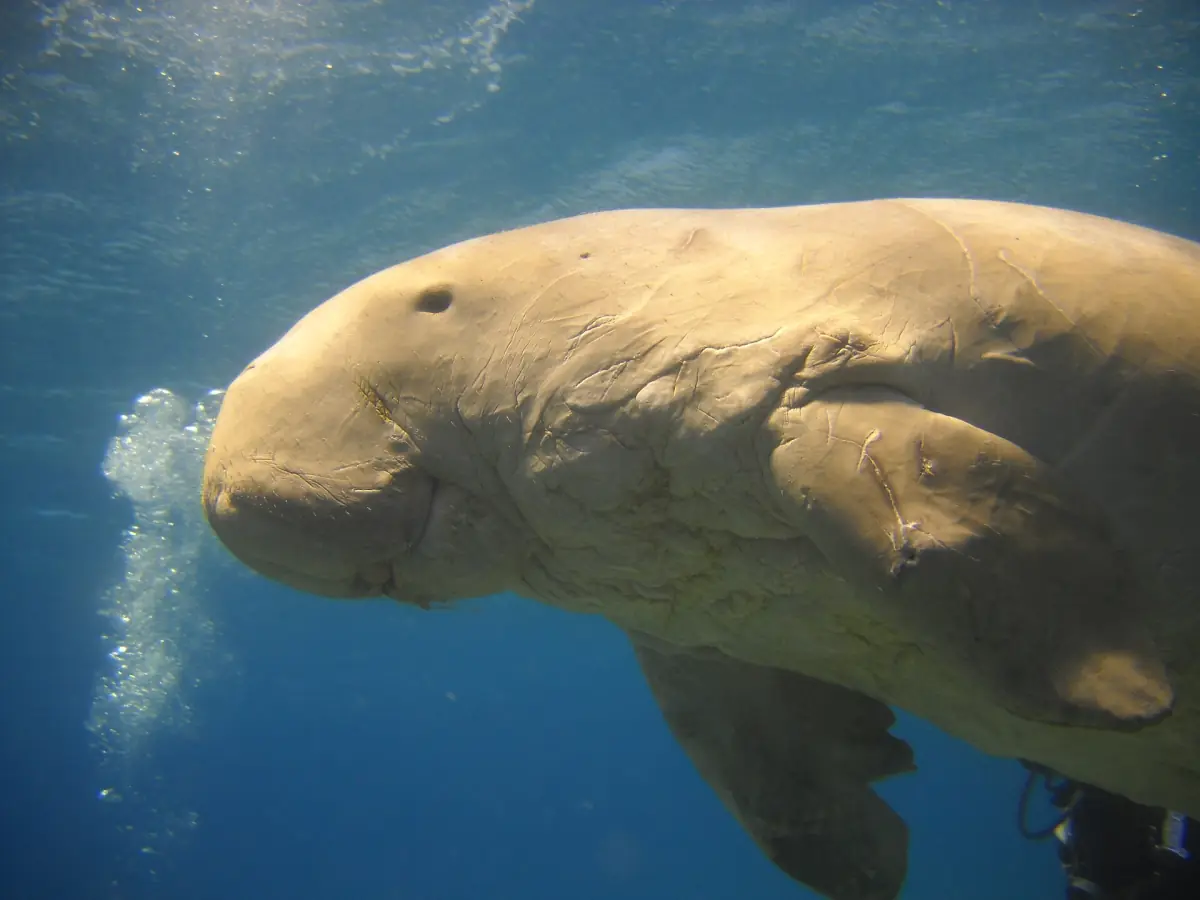
Abu Dabbab is a bay with seagrass and coral habitat that dugongs and turtles use. It is entered through a paid day pass, and you can read how that works on the page about Abu Dabbab Bay. Boat trips to reefs and bays along the coast are the other option, and the snorkeling page compares them.
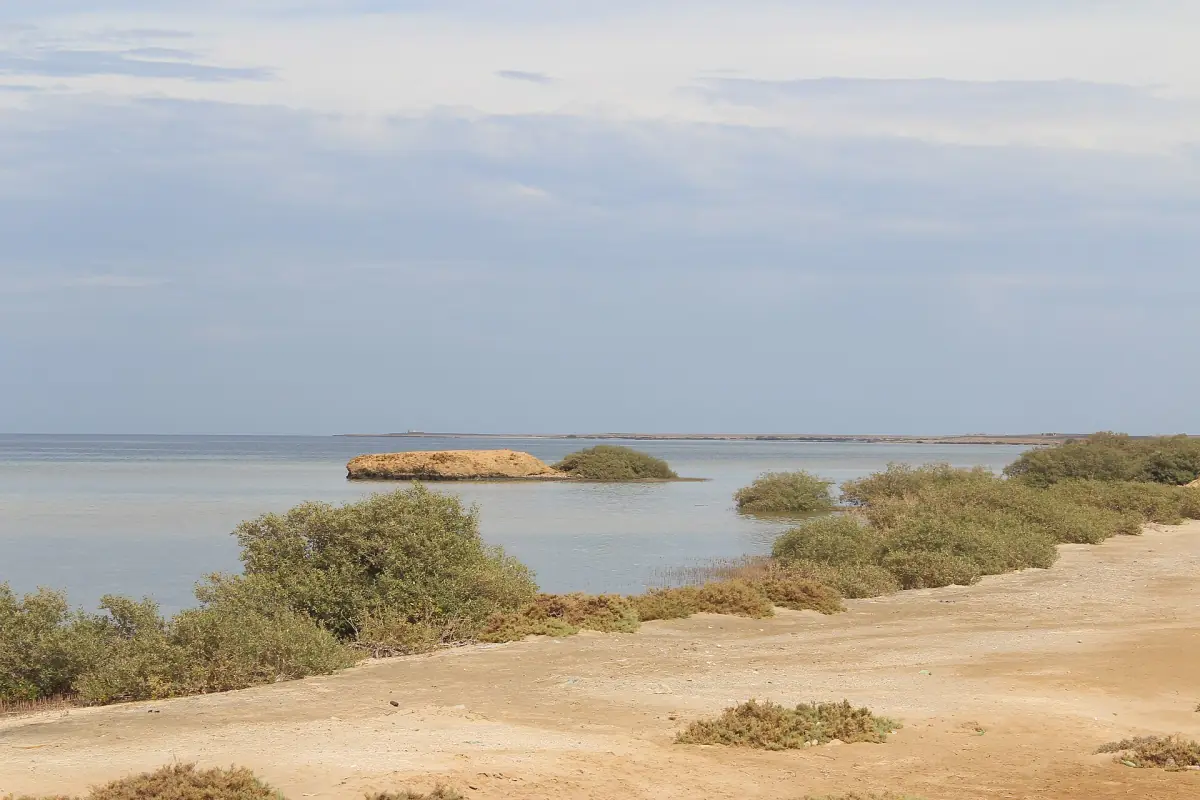
The south of the coast, around Wadi el Gemal, is a nesting area for turtles. You can visit parts of the park by boat or on land, but nests are not an attraction, and no season can be promised. There is no reliable nesting calendar for the coast, so be wary of any trip that sells a fixed turtle season.
What to ask before you book
Six questions that separate careful operators from the rest.
Is there a briefing?
A good trip explains the rules for animals and reef before anyone enters the water.
How big is the group?
The limit on organised open-water trips is 12 guests per snorkel guide, and bad conditions can call for fewer.
Where does the boat tie up?
Boats should use moorings, not anchors on the reef.
Is a sighting promised?
If it is, be careful. Turtles cannot be ordered.
Are flippers and masks included?
Check what the price covers, and bring your own mask if you can.
Where is the stop?
Ask which bay or reef is planned, so you know whether you are going to seagrass, to a reef wall or to a lagoon.
More Marsa Alam guides
Pages that fit a day with turtles.
Sea turtles in Marsa Alam: frequently asked questions
Which turtles can I see in Marsa Alam?
Mostly green turtles and hawksbill turtles, the two species that nest and feed on this coast. Leatherback and olive ridley turtles are rare.
Is there a turtle season?
No season can be promised for visitors. Turtles can be met on several kinds of trips, but no month guarantees a sighting.
Can I touch a turtle for a photo?
No. Do not touch, grab, lean on, circle or feed a turtle. Keep your distance and let the animal go its own way.
Are green turtles still endangered?
In February 2026 the global category of the green turtle was named Least Concern. Local threats and protection still matter, so the rules in the water are the same.
Where can I snorkel with turtles?
Seagrass bays such as Abu Dabbab and reefs reached by boat are the usual places. Ask the operator which stop is planned.
Do I need my own mask and fins?
Check what the trip price covers, and bring your own mask if you can. A briefing on the rules for animals and reef comes before you enter the water.