Marsa Alam weather: the pattern in short
Marsa Alam lies on Egypt's Red Sea coast, in a desert climate. Summers are very hot, winters are mild by day and cool at night, and rain is rare. The monthly table below shows the values of the Hurghada station on the Red Sea coast, averages for 1981 to 2010, as a guide to the pattern of the seasons.
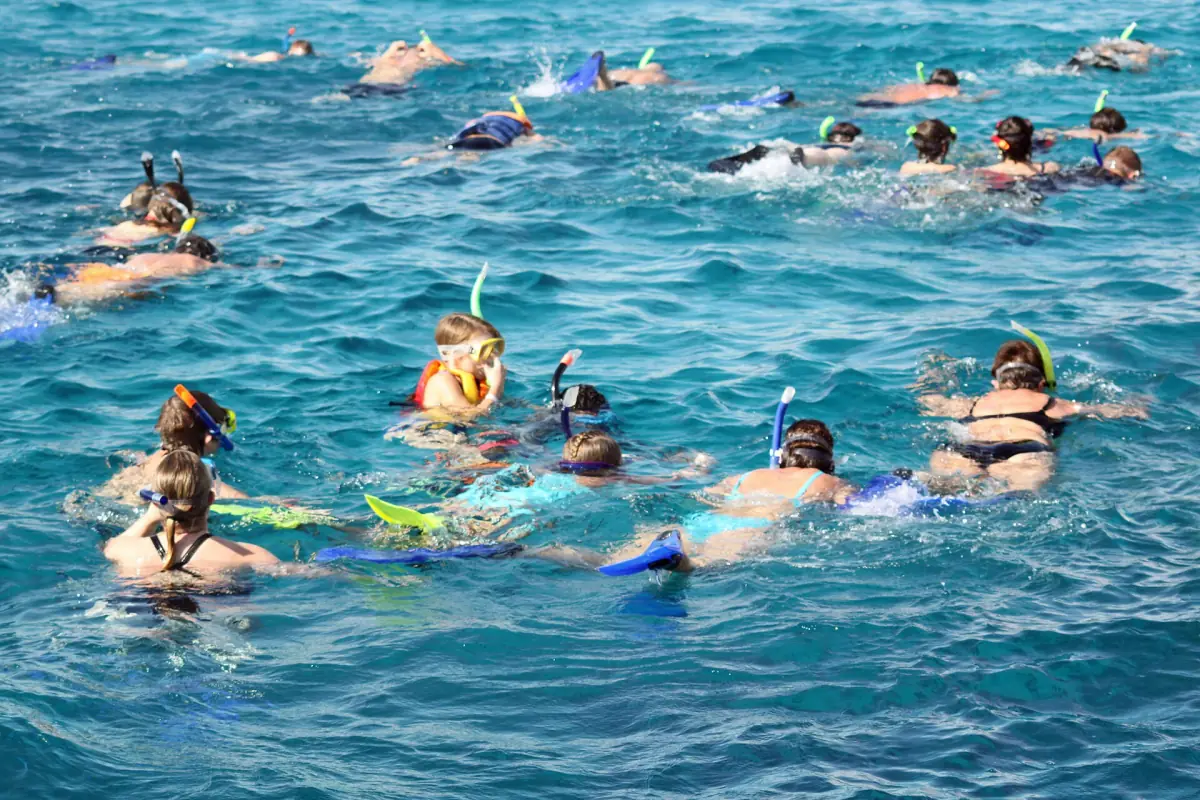
There is no single right season. The right time depends on your activity and on how you handle heat and cool evenings. If you plan sea days, snorkeling trips from Marsa Alam run through the year, and the weather mainly decides how warm you feel on deck and in the wind.
Climate by month on the Red Sea coast
Values of the Hurghada station, averages 1981 to 2010. Highs and lows are means of daily values, not records.
| Month | Average high (°C) | Average low (°C) | Rain (mm) |
|---|---|---|---|
| January | 21.7 | 11.2 | 0.6 |
| February | 22.7 | 11.7 | 0.0 |
| March | 25.4 | 14.4 | 0.3 |
| April | 29.3 | 18.3 | 0.0 |
| May | 31.8 | 22.4 | 0.0 |
| June | 33.9 | 25.5 | 0.0 |
| July | 35.0 | 27.1 | 0.0 |
| August | 35.1 | 27.1 | 0.0 |
| September | 33.3 | 24.9 | 0.0 |
| October | 31.3 | 21.5 | 0.9 |
| November | 27.0 | 17.0 | 2.2 |
| December | 23.2 | 13.0 | 1.5 |
A rounded 0.0 mm does not promise a dry day. Rain is rare, but the table is an average over many years.
Our pick: a snorkel boat trip
Two snorkel stops and a BBQ meal, out of Port Ghalib. Sea conditions and wind change from day to day, so ask your operator the day before.
Hand-picked tours, booked through GetYourGuide. Prices are indicative starting prices in US dollars (as of October 2026). Tap a tour for live availability and the current price in your currency.
Marsa Alam trips for every season
Reef, dolphin and desert days, with live prices and availability.
Climate and travel seasons, month by month
What the table means for your plans.
November to March: mild days, cool evenings
Highs stay between about 22 and 27 °C and lows fall to 11 to 17 °C. That suits long days on land, desert trips and the wind on a boat deck. If you feel the cold quickly in the water, bring a light wetsuit or a UV shirt for snorkeling, and a jacket for evenings.
April and May: warming up
Highs reach about 29 to 32 °C. Days are warm without the peak heat of summer, and nights stay mild.
June to September: the heat of the year
Highs are 33 to 35 °C and nights stay at 25 to 27 °C in July and August. Plan the day around shade, water and early starts, and use sun protection on every boat trip.
October: still warm, a little rain possible
Highs are around 31 °C and lows about 21 °C. A little rain is possible, but averages stay below 1 mm.
Wind and sea temperature
The wind matters more than the air temperature for how a boat day feels. At Samadai, the dolphin reef, the prevailing wind is from the north, and the lagoon is open to the south and sheltered. That describes one spot, not the whole coast, so ask your operator how the day looks on the bay you will visit.
As a rough guide, Egyptian Red Sea water is about 20 °C in December and about 29 °C in August. These are approximate values for orientation. Choose a wetsuit by how long you stay in the water and how fast you cool down.
Best time to visit Marsa Alam
Choose by activity and by how you handle heat.
| Your priority | Months to look at | Why |
|---|---|---|
| Mild days, desert and day trips | November to March | Highs of about 22 to 27 °C |
| Warm air without the peak heat | April, May and October | Highs of about 29 to 32 °C |
| Peak summer heat | June to September | Highs of 33 to 35 °C |
| Warmest nights | June to September | Lows of 25 to 27 °C in July and August |
For most visitors who want to combine reef days and trips on land, the cooler months from November to March are the most comfortable. Bring layers for the evening and a wetsuit if you tend to cool down in the water. Reef sightings do not follow a calendar, so do not choose a month in hope of a particular animal.
Plan the rest of your trip
Pages that fit the season you choose.
Marsa Alam weather: frequently asked questions
What is the weather like in Marsa Alam in winter?
Days are mild and nights are cool. At the Hurghada station, January has an average high of 21.7 °C and an average low of 11.2 °C. Bring a jacket for evenings and wind on the water.
When is Marsa Alam hottest?
July and August. The Hurghada station gives average highs of 35.0 and 35.1 °C and average lows of 27.1 °C.
Does it rain in Marsa Alam?
Rarely. The Hurghada station shows a yearly total of about 5.5 mm, mostly from October to January. A rounded zero in a month is not a promise of a dry day.
How warm is the sea?
Roughly 20 °C in December and 29 °C in August, as a rough guide for the Egyptian Red Sea. Choose your wetsuit by the time you spend in the water.
When is the best time to visit Marsa Alam?
There is no single right season. Choose by activity and by how you feel heat and cool evenings. November to March suits most trips that mix water and land.